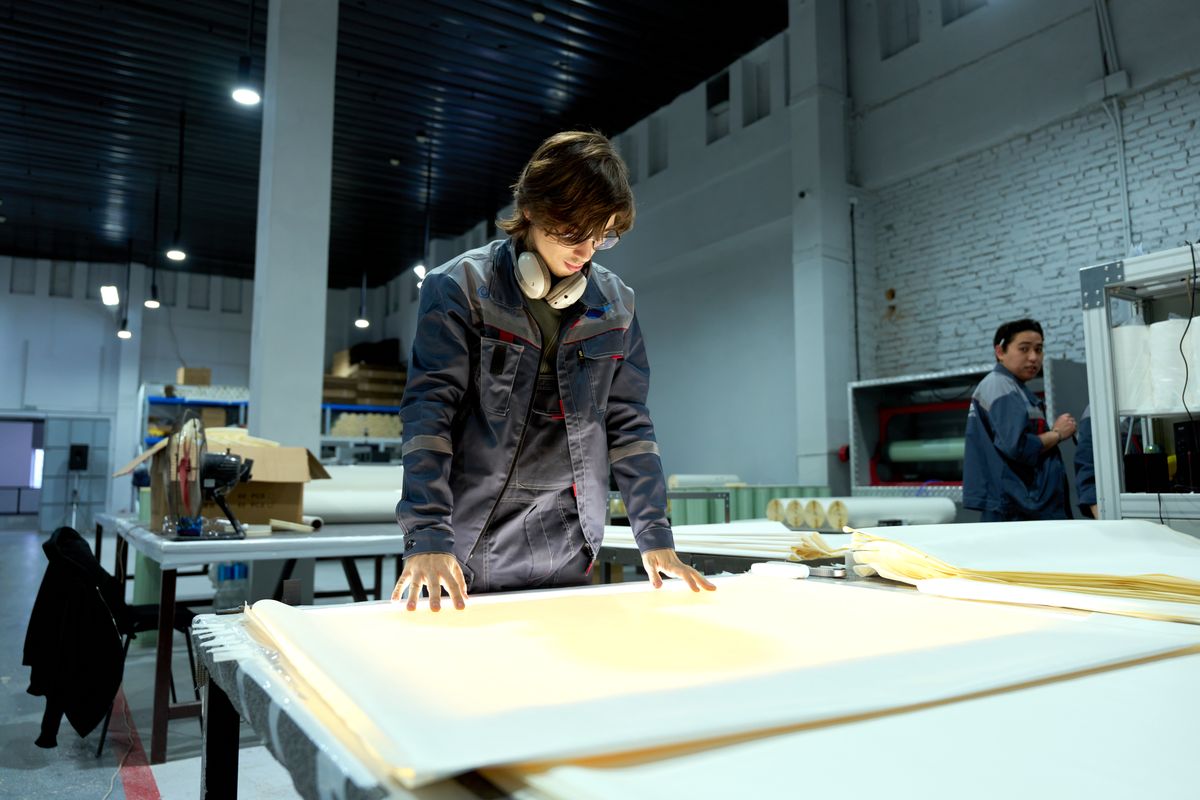
Quality control is the backbone of a successful bag manufacturing operation, yet many wholesale buyers have only a vague understanding of what it involves. Knowing how quality control works — what to inspect, when to inspect, and what standards to apply — empowers you to hold your supplier accountable and avoid the costly consequences of defective shipments. This guide breaks down the essential QC processes every bag buyer should understand.
The Three Stages of Quality Inspection
Professional quality control in bag manufacturing follows a three-stage inspection model aligned with international AQL (Acceptable Quality Limit) standards:
- Pre-production inspection: Raw materials, components, and samples are checked before mass production begins. This catches material defects, color mismatches, and specification errors early — when corrections are cheapest.
- Inline (during production) inspection: Random checks are performed at various stages of the production line — after cutting, after sewing, after printing, and after assembly. This catches process issues before they compound across the entire order.
- Final (pre-shipment) inspection: A statistically significant sample of finished goods is inspected against the approved sample and specification sheet. This is the last checkpoint before goods leave the factory.
What Gets Inspected
A thorough quality inspection covers multiple dimensions of the finished bag. Here are the key checkpoints for bag manufacturing:
- Material quality: Fabric weight, color consistency, texture, and absence of defects like holes, runs, or discoloration.
- Stitching and construction: Stitch density, seam strength, straightness of stitching lines, and reinforcement at stress points like handles and corners.
- Hardware: Zippers, snaps, buckles, and D-rings are tested for function, durability, and finish quality.
- Printing and branding: Logo placement, color accuracy against Pantone references, print adhesion, and alignment.
- Dimensions: Bag measurements are checked against the approved specification to ensure consistency.
- Overall appearance: Cleanliness, symmetry, thread trimming, and absence of odors or stains.
"Quality is not inspected into a product — it is built into the process. The best QC system is the one that prevents defects, not just catches them." — Eco Trade Limited QC Team
Understanding AQL Standards
The AQL (Acceptable Quality Limit) system is the international standard for statistical sampling in quality inspection. It defines how many units to inspect from a batch and how many defects are acceptable before the batch is rejected. The most commonly used AQL levels for bag manufacturing are:
- Critical defects: AQL 0.0 — zero tolerance for defects that could cause harm or make the product unusable (e.g., handles that detach under normal load).
- Major defects: AQL 2.5 — defects that affect function or appearance significantly (e.g., misaligned printing, broken zippers, large fabric flaws).
- Minor defects: AQL 4.0 — defects that are cosmetically noticeable but do not affect function (e.g., slightly uneven stitching, minor thread ends).
For a typical order of 5,000 bags, an AQL Level II inspection would require checking 200 randomly selected units. If more than 10 major defects or 14 minor defects are found, the batch fails inspection.
Common Defects in Bag Manufacturing
Being aware of the most common defects helps you know what to look for in inspection reports and sample evaluations:
- Crooked or skipped stitching: Indicates sewing machine issues or operator error. Can compromise seam strength.
- Fraying edges: Unfinished or poorly overlocked edges that will unravel with use. Particularly common on cotton and canvas bags.
- Print fading or misregistration: Colors that do not match the approved artwork or are offset from their intended position.
- Handle attachment weakness: Handles that are not adequately reinforced, leading to failure under load.
- Color variation between units: Inconsistent dye lots or fabric batches producing visible color differences across the order.
- Dimensional inconsistency: Bags that vary in size from unit to unit, indicating poor cutting or sewing control.
How to Work With Your Supplier on QC
The most effective quality control is collaborative, not adversarial. Here is how to build a productive QC relationship with your bag supplier:
- Provide a clear specification sheet: Include detailed measurements, material requirements, construction notes, and printing specifications. Ambiguity is the enemy of consistency.
- Approve a golden sample: A physical, signed-off sample that serves as the production standard. Every unit should match this reference.
- Request inspection reports: Ask for documentation at each inspection stage. A reputable supplier will provide these proactively.
- Consider third-party inspection: For large or critical orders, hire an independent inspection agency to conduct the final pre-shipment inspection. This provides an unbiased verification.
- Establish a defect resolution process: Agree in advance what happens when defects are found — rework, replacement, or price adjustment.
The Cost of Poor Quality
The true cost of quality failures extends far beyond the defect rate. A shipment with 5 percent defects means 5 percent of your customers receive a substandard product, leading to returns, negative reviews, and brand damage. The cost of a single product return — including shipping, processing, and customer service — can exceed the profit from several units. Investing in robust quality control upfront is significantly cheaper than managing the consequences of poor quality downstream.
At Eco Trade Limited, we follow a rigorous three-stage QC process on every order, with AQL 2.5 as our minimum standard for major defects. We provide inspection reports at each stage, welcome buyer or third-party audits, and maintain a golden sample system for every custom product. Our defect rate consistently sits below 2 percent — because we believe quality is built into every step, not inspected in at the end.