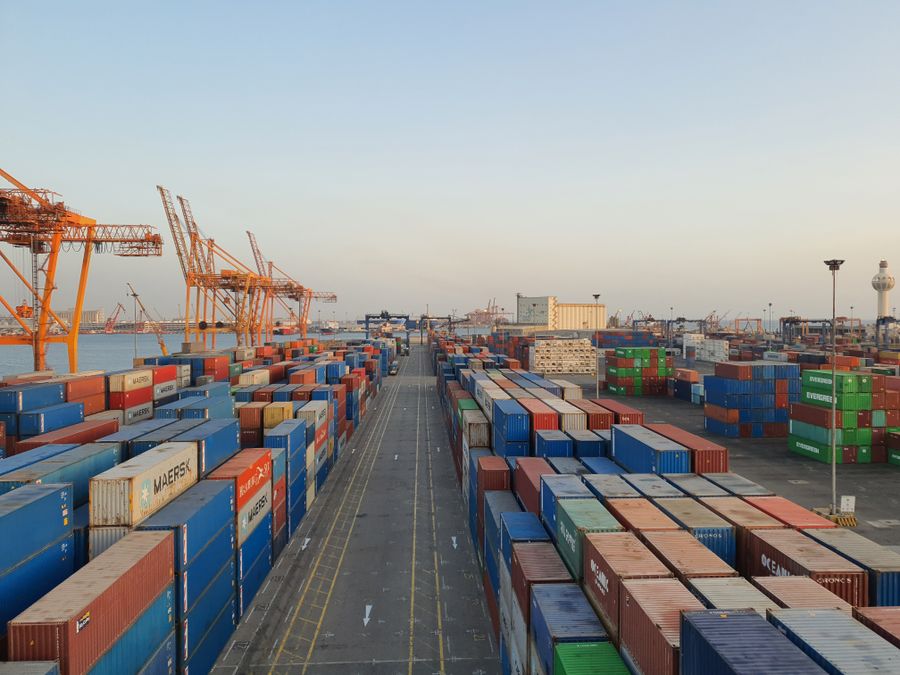
Cargo containers stacked at an export shipping port
Global Logistics

Export & Shipping

We handle the complete export process so your order arrives on time and in full. From documentation to container loading, from freight booking to port delivery, our logistics team coordinates every detail. You focus on selling — we handle the rest.

Export Countries

Shipping to 40+ countries across five continents, with experience navigating diverse customs requirements.

Worldwide Shipping

Sea, air, and courier freight options to suit your timeline and budget — from samples to full containers.

Documentation

Complete export paperwork prepared and verified — commercial invoices, packing lists, certificates of origin, and more.

Container Loading

Supervised loading with photographs and container seal numbers for every shipment — full transparency.

Freight Support

Forwarder coordination, rate negotiation, and door-to-port tracking assistance throughout transit.

USA UK Germany France Canada Australia UAE Spain Netherlands
Shipping Methods

Freight Options for Every Timeline & Budget

We offer three primary shipping methods, each suited to different order sizes, urgency levels, and budget considerations.

Sea Freight — Most Cost-Effective for Large Orders

Sea freight is the most economical shipping method for large orders, especially for full container loads (FCL). A standard 20-foot container can hold approximately 50,000 to 80,000 units of jute or cotton bags, depending on size and packaging. A 40-foot container holds roughly double that volume.

Transit times range from 20 to 40 days depending on destination port. Major routes include Chittagong to Rotterdam (25-30 days), Chittagong to Hamburg (28-35 days), Chittagong to Los Angeles/Long Beach (30-40 days), and Chittagong to Sydney (25-35 days). We coordinate with trusted freight forwarders to secure competitive rates and reliable vessel schedules.

For orders that do not fill a full container, we arrange less than container load (LCL) shipping, where your goods share container space with other shipments. LCL is more expensive per unit than FCL but still far cheaper than air freight for medium-volume orders.

Air Freight — Fast Delivery for Urgent Orders

Air freight provides much faster delivery, with transit times of 5 to 10 days to most major airports worldwide. This is the recommended option when you need products quickly — for example, to meet a seasonal launch deadline or to restock a fast-selling product.

Air freight is more expensive than sea freight, particularly for heavy or bulky shipments. It is most cost-effective for smaller orders (typically under 500 kg) or for high-value products like leather goods where the higher per-unit shipping cost is justified by the product price point.

We handle all air freight documentation, including airway bills, and coordinate with major airlines operating from Dhaka and Chittagong international airports. Door-to-airport service is standard, and door-to-door can be arranged on request.

Courier Services — For Samples & Small Parcels

For pre-production samples, small sample orders, or very small production runs, we use international courier services such as DHL, FedEx, and UPS. Courier shipping provides door-to-door delivery with full tracking, typically within 5 to 7 business days.

This is the fastest and most convenient option for samples — you can receive a pre-production sample within a week of sample completion, keeping your project timeline on track. Courier costs are based on actual or volumetric weight (whichever is greater), and we pass through our negotiated discount rates to you with no markup.

Regardless of the method you choose, we handle all export documentation including commercial invoices, packing lists, certificates of origin, and any destination-specific certificates required by your country. Our documentation team verifies every document for accuracy before submission to minimize the risk of customs delays.

Export Documentation

Complete Paperwork, Handled for You

One of the most common pain points for international buyers is export documentation. We eliminate that stress by handling everything in-house.

Our in-house export documentation team prepares and verifies all required paperwork for every shipment. Here is what we handle:

  • Commercial Invoice — Official invoice showing product descriptions, quantities, unit prices, total value, currency, and payment terms. Used by customs to assess duties and taxes.
  • Packing List — Detailed list of carton contents, weights, dimensions, and carton numbers. Used by customs and freight handlers to verify shipment contents.
  • Bill of Lading (B/L) or Airway Bill (AWB) — The primary transport document that serves as a receipt for goods, evidence of the contract of carriage, and (for B/L) a document of title. We coordinate with the shipping line or airline to issue this.
  • Certificate of Origin (CO) — Official document certifying the country of manufacture. Required by many destination countries for customs clearance and for claiming preferential tariff treatment under trade agreements.
  • GSP Form A — Generalized System of Preferences certificate that may qualify your shipment for reduced or zero import duties in eligible destination countries.
  • Phytosanitary Certificate — Required by some countries for jute and other plant-based fiber products, certifying that the goods have been inspected and are free from pests and diseases.
  • Fumigation Certificate — Certification that wooden packing materials (if used) or natural fiber products have been treated per ISPM-15 standards. Required by many countries to prevent pest introduction.
  • Customs Declaration — Export customs declaration filed with Bangladesh customs authorities for all exports above a certain value threshold.

All documents are prepared in English, verified for accuracy, and shared with you in digital format (PDF) before shipment. Hard copies travel with the shipment, and copies are sent to your customs broker or freight forwarder. We have experience shipping to countries with complex customs requirements and can advise on any destination-specific documentation you may need.

Incoterms

Shipping Terms We Support

We work with the most common international trade terms (Incoterms) to give you flexibility in how your shipment is managed.

FOB (Free On Board) — Most Common

Under FOB terms, we are responsible for all costs and risks up to the point where goods are loaded onto the vessel at the port of departure (Chittagong). Once goods are on board, responsibility transfers to you. You arrange and pay for ocean freight, insurance, and destination customs clearance. FOB is the most popular Incoterm for our buyers because it gives you control over freight costs and choice of forwarder.

CIF (Cost, Insurance & Freight)

Under CIF terms, we arrange and pay for ocean freight and marine insurance to your destination port. You are responsible for destination customs clearance, duties, and inland transport. CIF is convenient if you prefer not to arrange freight yourself — we handle the shipping logistics up to your port, and you handle the rest.

EXW (Ex Works)

Under EXW terms, you are responsible for all transportation from our factory door, including export customs clearance. This is the least common option for our buyers but is available if you have your own logistics network and prefer full control.

We are flexible and can discuss other Incoterms (such as C&F or DAP) if your specific situation requires. When you request a quotation, we will ask which Incoterm you prefer and structure the pricing accordingly.

Container Loading

Supervised Loading with Full Transparency

Container loading is a critical step that is often overlooked. Poorly loaded containers can result in damaged goods, while incorrect carton counts can cause disputes. We eliminate both risks with supervised loading and full photographic documentation.

When your order is ready for shipping, an empty container is brought to our facility. Our loading supervisor oversees the entire process:

  • Container condition is inspected — we check for cleanliness, structural integrity, and any signs of water damage or pest infestation before loading begins.
  • Cartons are counted as they are loaded, with the total verified against your packing list and order quantity.
  • Cartons are stacked to maximize space utilization while ensuring stability during transit. Heavy cartons go on the bottom, lighter ones on top, with no gaps that could cause shifting.
  • Photographs are taken at multiple stages — empty container, partially loaded, fully loaded, and sealed container with seal number visible.
  • The container is sealed with a numbered seal, and the seal number is recorded on the shipping documents and shared with you.

You receive a loading report that includes all photographs, the carton count, container number, seal number, and loading date. This gives you complete confidence that the correct quantity was loaded and that goods were packed securely for transit.

Packaging for Export

How Your Goods Are Packed for International Shipping

Export packaging must withstand weeks of transit, multiple handling points, and varying climate conditions. Our export packaging is designed for maximum protection:

  • Individual unit packaging — Each bag is packed in an individual poly bag (or as specified) to protect against moisture, dust, and scuffing during transit.
  • Inner cartons — Units are packed into inner cartons in standard quantities (e.g., 25 or 50 units per carton) for easy counting and distribution.
  • Master export cartons — Inner cartons are consolidated into heavy-duty, 5-ply corrugated master cartons designed for international shipping. Carton dimensions are calculated for efficient container loading.
  • Moisture protection — Silica gel packets or desiccants are included in master cartons for shipments to humid destinations, and moisture-barrier lining is available on request.
  • Shipping marks — Master cartons are marked with your shipping marks, carton numbers, product descriptions, gross/net weights, and handling instructions as required.
  • Palletizing — Available on request for buyers who prefer palletized shipments for easier warehouse handling at destination.

Proper export packaging is not an area to cut costs — damaged goods cost far more than the packaging that would have prevented the damage. We invest in quality cartons and packing materials to ensure your goods arrive in the same condition they left our factory.